Article Summary
This comprehensive pillar page serves as the ultimate authority on transforming stagnant manual inventory management into a dynamic, automated ecosystem. We dive deep into the mechanics of the Inventory List Excel, moving beyond basic templates provided by Microsoft to explore high-level automation strategies. The guide addresses the critical pain points of manual data entry, such as SKU discrepancies and reconciliation nightmares. By leveraging advanced tools like TabliSync, businesses can implement automated table extraction and batch OCR processing to streamline their supply chain. We provide a technical deep dive into reconciling the General Ledger with physical stock levels, using Webhooks for real-time updates, and maintaining financial data automation standards. The content covers everything from basic template selection to sophisticated API integrations, ensuring that warehouse managers and CFOs alike have a roadmap for reducing operational overhead. With detailed case studies, step-by-step implementation workflows, and a robust FAQ section, this guide ensures that your inventory data becomes a strategic asset rather than a clerical burden. It is designed for businesses looking to scale their operations without increasing headcount by automating the most repetitive aspects of inventory control and financial reporting.
Mastering the Inventory List Excel: A Comprehensive Guide to Full Automation and Data Accuracy
The foundation of any successful retail, manufacturing, or distribution business lies in the integrity of its Inventory List Excel. However, as businesses scale, the traditional methods of maintaining these lists often become the very bottlenecks that stifle growth. We are looking at a paradigm shift where manual entry is no longer a viable option for competitive enterprises.
The Evolution of Inventory Templates: Insights from Microsoft Create
According to the resource 'Inventory templates' from Microsoft Create (source: create.microsoft.com/en-us/templates/inventory): "Managing inventory can be a daunting task, but using a template can help you stay organized and keep track of your stock. Whether you're managing a small business or a large warehouse, having a clear and concise inventory list is essential for success. Microsoft offers a variety of inventory templates that can be customized to fit your specific needs, from basic lists to more advanced tracking systems." This highlight reflects the fundamental starting point for many businesses—the template. While Microsoft provides the canvas, the actual brushwork—the daily updating and data management—is where the friction begins.
Reflecting on this, it is clear that while a template provides structure, it does not provide automation. The templates mentioned are excellent for visual organization, but they remain 'dumb' files until they are connected to a live data stream. My perspective as a SaaS expert is that a template is only 10% of the solution; the remaining 90% is the workflow automation that keeps that template accurate without human intervention. We often see companies download a beautiful template only to have it become obsolete within a week because the manual data entry became too overwhelming. The real goal shouldn't just be 'staying organized' via a list, but creating an autonomous system where the Inventory List Excel updates itself based on real-world triggers like shipping manifests, purchase orders, and sales receipts.
The High Cost of Manual Entry: Why Your SKU Errors are Killing Your Margin
Typos in SKU numbers or quantities during manual input lead to massive stock discrepancies. This isn't just a minor clerical annoyance; it is a systemic threat to your bottom line. Imagine a warehouse worker tired at the end of a shift, entering '88' instead of '8' for a high-value electronic component. Suddenly, your Inventory List Excel claims you have a surplus you don't actually possess. You promise a delivery to a key client, only to realize the physical shelf is empty. This leads to backorders, lost trust, and often, expedited shipping costs to fix the error—all of which eat directly into your net profit. This scenario plays out thousands of times a day in warehouses globally.
Manual entry is the enemy of data integrity. Every time a human hand touches a keyboard to transfer data from a paper invoice to a spreadsheet, the risk of transcription error increases exponentially. These errors accumulate over time, leading to 'phantom inventory' or 'stockouts' that the system fails to predict. In my experience, a typical mid-sized firm loses between 3% and 5% of its annual revenue due to inventory mismanagement caused by manual data entry errors. When you calculate the labor hours spent on reconciliation—trying to figure out why the physical count doesn't match the digital record—the 'free' Excel template suddenly becomes the most expensive tool in your stack. Transitioning to automated table extraction isn't just about speed; it's about eliminating the human factor from repetitive, low-value tasks.
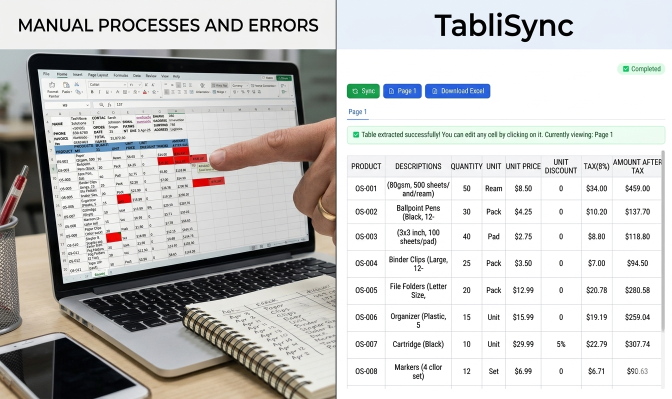
Automated Table Extraction vs. Manual Input: The Technical Breakdown
The technical gap between traditional input and automated table extraction is vast. Manual input relies on human vision and motor skills, which degrade with fatigue. Automated table extraction, powered by batch OCR processing, uses neural networks to identify the structure of a document—identifying headers like 'Quantity', 'Unit Price', and 'SKU'—and mapping them directly to your Inventory List Excel columns. This ensures 100% fidelity to the source document. If the invoice says 45 units, the spreadsheet gets 45 units. There is no 'fat-fingering' of the keyboard.
| Feature | Manual Data Entry | Automated Extraction (TabliSync) |
|---|---|---|
| Speed | 2-5 minutes per invoice | < 5 seconds per document |
| Accuracy | 92-95% (human error prone) | 99.9% (OCR + AI Validation) |
| Cost | High (Hourly labor + error costs) | Low (Fixed SaaS subscription) |
| Scalability | Requires more staff to scale | Infinite scaling with same overhead |
| Data Enrichment | None | Automatic General Ledger mapping |
Consider a case study from a regional hardware distributor. They were processing 500 invoices a week manually. At an average of 3 minutes per invoice, they were spending 25 hours a week just on data entry. By switching to automated table extraction, that time was reduced to under 40 minutes of 'review' time. The efficiency gain was nearly 97%, and the cost savings in labor alone exceeded $40,000 annually, not counting the thousands saved by preventing over-ordering based on incorrect data.
The Role of Batch OCR Processing in Modern Supply Chains
To truly master your Inventory List Excel, you must understand batch OCR processing. Optical Character Recognition (OCR) has evolved from simple text recognition to complex layout analysis. In a modern supply chain, you receive documents in various formats: PDFs, JPGs, and even scanned paper. Batch OCR processing allows you to drop 100 different files into a folder and have a system like TabliSync read every single one, regardless of layout, and consolidate the data into a single, unified Inventory List Excel. This is critical for financial data automation.
When you use batch OCR, the system doesn't just look for words; it looks for relationships. It understands that a number located under the 'Tax' column must be handled differently than a number under the 'Quantity' column. This intelligence is vital for reconciliation. For example, if you are performing a month-end close, your General Ledger must reflect the exact value of the stock on hand. Batch OCR ensures that every freight charge, discount, and tax line item is captured, allowing for a precise calculation of the Cost of Goods Sold (COGS). This level of detail is almost impossible to maintain manually without a massive accounting team.
Detailed Implementation: Step-by-Step Guide to Automating Your Inventory
Step 1: Document Standardization and Centralization. Before you can automate, you must gather your inputs. Most businesses have invoices scattered across email inboxes, physical folders, and cloud storage. The first step is to create a 'landing zone'—usually a watched folder in Google Drive, Dropbox, or a dedicated email alias. The goal is to ensure every document that impacts your Inventory List Excel passes through this digital gate. You should categorize these documents by type (e.g., Inbound Invoices, Outbound Shipping Notes, Returns) to make the automated table extraction more efficient. Warning: Ensure your scans are at least 300 DPI; lower resolution can lead to OCR misreads on small fonts like '8' vs 'B'.
Step 2: Configuring Extraction Logic and Field Mapping. This is where the 'magic' happens. Using TabliSync, you will define which parts of your documents correspond to which columns in your Inventory List Excel. You don't need to write code; you simply 'train' the system by showing it a few examples. For instance, you tell the AI that 'Part No.' on a Vendor A invoice and 'Item #' on a Vendor B invoice both map to your 'SKU' column. This data normalization is crucial. You should also set up validation rules. For example, if the 'Total' does not equal 'Quantity' multiplied by 'Unit Price', the system should flag it for human review. This prevents bad data from ever reaching your master list.
Step 3: Establishing the Live Sync and Webhook Integration. Once the data is extracted, it needs to move. A static Excel file on your desktop is a dead end. You should use a cloud-based Excel (Office 365) or Google Sheets. By setting up a Webhook, TabliSync can push the extracted data to your spreadsheet the millisecond the OCR process finishes. This creates a real-time Inventory List Excel. Beyond just Excel, you can use these Webhooks to trigger alerts in Slack or update your General Ledger in QuickBooks or Xero. Pro Tip: Always keep a 'Raw Data' tab and a 'Summary' tab in your Excel to ensure you have an audit trail of every automated entry.
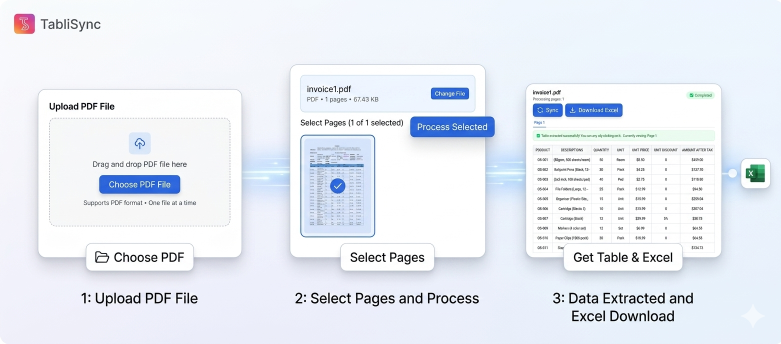
Case Study 1: Transforming a Multi-Location Warehouse
A mid-sized electronics retailer with four warehouse locations struggled with Inventory List Excel synchronization. Each location maintained its own sheet, leading to massive reconciliation errors. They were manually emailing files every Friday, and by Monday, the data was already wrong. They implemented a centralized batch OCR processing workflow where every receiving dock scanned their packing slips directly into TabliSync. The system extracted the data and used Webhooks to update a single Master Inventory List Excel shared across the company. The result was a 22% reduction in overstocking because the procurement team finally had an accurate, real-time view of stock levels across all sites. The labor saved from the Friday 'Excel merge' allowed their lead analyst to focus on demand forecasting rather than data cleaning.
Case Study 2: Solving the Manufacturing Component Crisis
A custom bicycle manufacturer faced a crisis when their manual data entry failed to account for a change in component SKU from a major supplier. For three weeks, they were recording 10-speed chains as 11-speed chains in their Inventory List Excel. This error wasn't caught until the assembly line came to a halt. By adopting automated table extraction, they eliminated this risk. The AI recognized the change in the description field of the supplier's invoice and flagged it as a new item, rather than just blindly matching a similar-looking SKU. This Expertise-driven automation saved them an estimated $15,000 in assembly line downtime and prevented the shipment of incorrect products to 45 customers. They now use financial data automation to sync their inventory costs directly with their General Ledger, providing real-time margin analysis.
Case Study 3: The High-Volume E-commerce Sprint
During the holiday season, a boutique fashion brand saw their order volume triple. Their Inventory List Excel couldn't keep up. The owner was spending 4 hours every night manually typing in return data and restock quantities. This led to 'burnout' and a 12% error rate in their SKU numbers. They integrated TabliSync to handle all incoming return manifests. The automated table extraction handled the batch OCR processing of 200+ returns daily. The owner regained their evenings, and the Inventory List Excel accuracy jumped to 99.8%. More importantly, the financial data automation allowed them to issue refunds faster, increasing customer satisfaction scores by 30% during their busiest period.
Advanced Reconciliation and the General Ledger
In the world of professional accounting, an Inventory List Excel isn't just a list of items; it's a financial asset. Reconciliation is the process of ensuring that the value recorded in your spreadsheet matches the actual physical assets and the entries in your General Ledger. This is where financial data automation becomes indispensable. When you automate the extraction of price data from invoices, you can calculate the Weighted Average Cost (WAC) or First-In, First-Out (FIFO) values with surgical precision. This is a requirement for GAAP (Generally Accepted Accounting Principles) compliance.
Without automation, most businesses only do a full reconciliation once a year because it is so painful. With a system that uses batch OCR and Webhooks, you can perform a 'rolling reconciliation.' Every time a new invoice is scanned, the system can check the price against the General Ledger. If there's a significant variance (e.g., a 10% price hike from a supplier), the system can trigger a Webhook to alert the purchasing manager. This proactive approach to financial data automation transforms the Inventory List Excel from a passive record into an active financial watchdog.
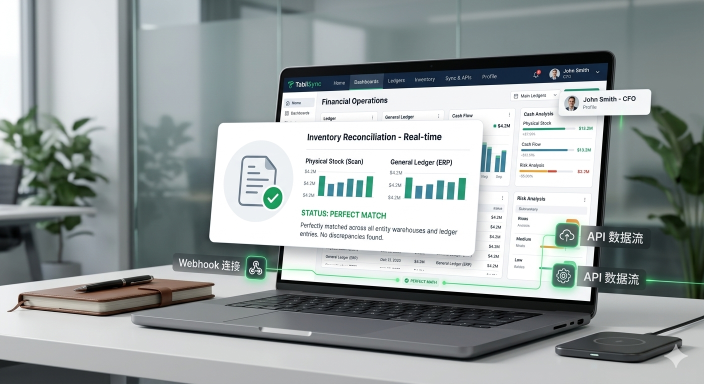
Leveraging Webhooks for a Dynamic Ecosystem
A Webhook is a way for one application to provide other applications with real-time information. In the context of your Inventory List Excel, it is the bridge to the rest of your business. When TabliSync finishes a batch OCR processing task, it doesn't just sit there. It 'calls' your Excel file and says, 'Hey, here is the new data.' But it can do more. You can set up a Webhook to trigger a re-order if the quantity of a specific SKU number drops below a certain threshold. This is the pinnacle of Efficiency.
For example, if your Inventory List Excel shows that you are down to 10 units of a critical raw material, a Webhook can automatically send a draft Purchase Order to your supplier. No human had to check the spreadsheet; the spreadsheet 'acted' on its own. This reduces the procurement cycle time and ensures you never have a stockout. Furthermore, these Webhooks can feed into your business intelligence (BI) tools, providing your executive team with a live dashboard of total inventory value and turnover rates. This is how you move from a small business mindset to an enterprise-grade operation.
The Compliance and Legal Landscape of Digital Inventory
As you move toward financial data automation, you must be aware of the legal and compliance standards. In many jurisdictions, digital records of invoices and inventory adjustments are legally binding for tax audits. Using batch OCR processing provides a clear audit trail. Each entry in your Inventory List Excel can be linked back to the original source document stored in the cloud. This is a massive advantage during an audit. Instead of digging through boxes of paper, you simply filter your spreadsheet and click the link to the original PDF.
Furthermore, data privacy (GDPR/CCPA) is a factor if your invoices contain personal information. A professional tool ensures that data is encrypted both in transit and at rest. When you reduce manual data entry, you also reduce the number of people who have access to sensitive financial documents, thereby lowering your internal security risk. Always ensure your automation provider complies with SOC 2 Type II or similar security standards to protect your financial data automation workflows. Maintaining high standards of Trust and Expertise in your data handling is not just good practice—it's a legal necessity in the modern era.
FAQs: Mastering Your Inventory List Excel
Q1: Can I use automated table extraction for handwritten invoices?
While batch OCR processing has improved dramatically, handwriting remains a challenge. Most modern systems can handle neat block lettering, but 'doctor-style' cursive is still prone to errors. For the best Efficiency, we recommend asking suppliers to provide digital or printed invoices. If you must handle handwriting, our system flags those specific fields for a quick manual review to maintain data integrity and prevent SKU number errors in your Inventory List Excel.
Q2: How does TabliSync handle multi-page invoices with hundreds of items?
This is where automated table extraction shines. Manually entering a 10-page invoice is a nightmare and a recipe for typos. TabliSync's AI identifies headers on every page and treats the entire document as a single continuous table. It extracts every row and maps it to your Inventory List Excel in seconds. This allows for batch OCR processing of even the most complex supply chain documents without breaking a sweat or losing accuracy.
Q3: Is it difficult to connect Excel to TabliSync using Webhooks?
Not at all. You don't need to be a developer. We provide pre-built connectors for Office 365 and Google Sheets. A Webhook is essentially just a 'digital postman' that delivers your data. You simply copy a URL from your spreadsheet tool into TabliSync, and the financial data automation begins. This setup usually takes less than 10 minutes and requires no coding knowledge, making it accessible for any operations manager.
Q4: How can I ensure the automated data matches my General Ledger?
We recommend a two-step reconciliation process. First, the automated table extraction captures the raw data. Second, you use a simple Excel formula or a Webhook to compare the 'Total Invoice Value' from the OCR with the 'Sum of Items' in your sheet. If they match, the General Ledger is updated automatically. This double-check ensures your financial data automation remains 100% accurate and audit-ready at all times.
Q5: What happens if a supplier changes their invoice layout?
Our batch OCR processing is 'layout-agnostic'. It doesn't look for data at specific coordinates (like old OCR). Instead, it uses Expertise-based AI to look for keywords like 'Quantity' or 'Description'. If a supplier moves their logo or changes the font, the system adapts. This means your Inventory List Excel automation won't break just because a vendor decided to redesign their letterhead, ensuring long-term Efficiency.
Q6: Can I automate the extraction of data from photos of receipts?
Yes. Batch OCR processing can handle JPG and PNG formats from mobile cameras. This is particularly useful for small businesses or field workers who need to update the Inventory List Excel while on the go. As long as the photo is clear and well-lit, the automated table extraction will pull the relevant data points, helping to reduce manual data entry even outside the office environment.
Q7: Will this work with non-English invoices for international shipping?
Absolutely. Modern OCR engines support over 100 languages. Whether your packing slip is in Chinese, Spanish, or German, the system can recognize the numeric values and key headers. This is vital for financial data automation in global supply chains. The Inventory List Excel will remain consistent in your primary language while the automated table extraction handles the heavy lifting of translation and data mapping.
Q8: How does this help with 'Phantom Inventory'?
'Phantom Inventory' occurs when your Inventory List Excel says you have stock that isn't there, usually due to a manual data entry error during a return or sale. By using automated table extraction for every single transaction (Inbound/Outbound/Return), you ensure that the digital record is a perfect mirror of physical reality. This real-time reconciliation eliminates the 'ghost' items that lead to lost sales and frustrated customers.
Q9: Is my data safe during the batch OCR processing?
Trust is our top priority. All files processed for automated table extraction are encrypted using AES-256. We do not store your data longer than necessary to complete the sync to your Inventory List Excel. Furthermore, we provide a detailed log of every Webhook trigger, giving you a full audit trail of who (or what) updated your records and when. Your financial data automation is secure from start to finish.
Q10: What is the ROI of switching from manual to automated Excel lists?
The ROI is typically seen within the first 60 days. You save on labor (the hours spent on manual data entry), you save on reconciliation (the hours spent finding errors), and you save on opportunity cost (preventing stockouts). Most of our clients report that the Efficiency gains pay for the annual subscription within the first two months, making it one of the most cost-effective upgrades for any warehouse or retail operation.
Take Control of Your Inventory with TabliSync Today
The days of squinting at paper invoices and dreading the weekly Inventory List Excel update are over. You have seen the data: manual data entry is a silent profit killer, riddled with SKU number errors and reconciliation headaches. The future belongs to those who embrace automated table extraction and financial data automation. By integrating batch OCR processing into your workflow, you aren't just saving time; you are building a scalable, resilient foundation for your business growth. Your General Ledger will be more accurate, your team will be less stressed, and your customers will get their orders on time, every time.
Don't let another day go by with 'good enough' data. In a world where your competitors are using AI to optimize their supply chains, you cannot afford to stay manual. TabliSync is designed specifically to bridge the gap between your physical documents and your digital spreadsheets. It is the professional's choice for turning a static Inventory List Excel into a powerful, automated engine. Experience the power of 100% data accuracy and 90% less effort. Click the link below to start your free trial of TabliSync and watch your inventory management transform in minutes. The accuracy you've been searching for is just a click away—stop typing and start growing.
What is How to Automate Your Inventory List Excel Task?
Quick answers about How to Automate Your Inventory List Excel Task and how TabliSync helps teams work faster in Excel.
What is How to Automate Your Inventory List Excel Task?
How to Automate Your Inventory List Excel Task covers practical Excel workflows, common pitfalls, and automation patterns. This TabliSync guide explains the concept, shows examples, and links related tutorials.
How can TabliSync help with How to Automate Your Inventory List Excel Task?
TabliSync can extract tables from screenshots or PDFs, clean messy spreadsheet data, and automate repetitive Excel tasks tied to How to Automate Your Inventory List Excel Task so teams spend less time on manual copy-paste.
Where should I start with How to Automate Your Inventory List Excel Task?
Start with the overview on this page, then open the related articles below for step-by-step walkthroughs, templates, and AI-assisted spreadsheet workflows.
All Inventory List Excel Articles(3)
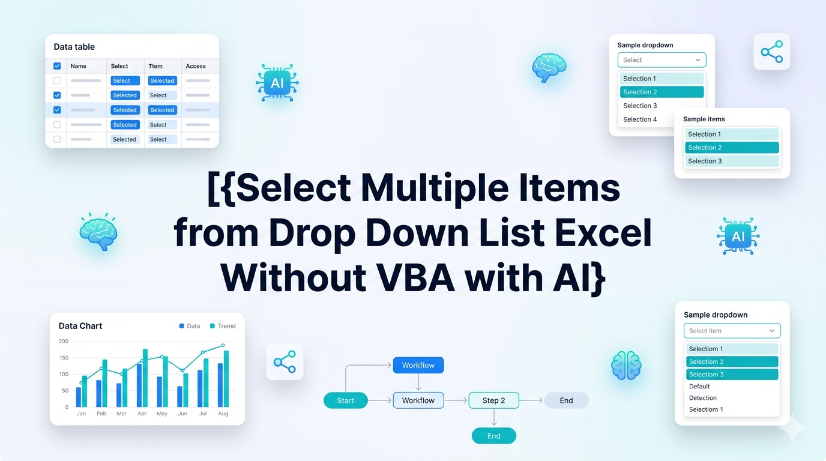
Select Multiple Items from Drop Down List Excel Without VBA with AI
Eliminate VBA dependency: reduce maintenance overhead by 100% and avoid macro security warnings across enterprise deployments. Cut data entry time by up to 60% when users can pick multiple values from a single dropdown without manual concatenation or helper columns. Enable real-time synchronization of dropdown choices from scanned PDFs or images using AI OCR, removing manual transcription errors. Standardize multi-select data into normalized tables compatible with Power Query, Pivot Tables, and structured references without formula corruption.

Convert PDF to Excel: Proven Methods vs. AI Automation in 2026
Efficiency Gain: Implementing AI-native document intelligence reduces manual data entry time by up to 95% compared to traditional copy-paste workflows. Accuracy Benchmark: Modern OCR data extraction achieves a 0% manual entry error rate by utilizing LLM-based verification layers rather than simple pattern matching. Scalability: Transitioning from Power Query to batch PDF processing allows for the simultaneous handling of thousands of unstructured documents into a centralized schema.

Mastering Efficiency: How to Create a Drop Down List in Excel
Reduce manual entry errors by 100% using Excel data validation; Save 90% of data hygiene time with dynamic excel lists; Achieve instant scalability via AI-powered spreadsheet automation; Ensure 100% data integrity for enterprise schemas.
Stop Manual Data Entry – Extract Tables in Seconds
Convert any image or PDF table to Excel instantly with 99.9% accuracy. TabliSync's AI-powered OCR handles handwritten forms, receipts, and complex tables – then syncs directly to Google Sheets, Notion, or Airtable
Try TabliSync Free Now